
IDHA’s 2026 training series, Archeologies of Grief: Unearthing Our Wisdom, is for those interested in understanding what has been stolen or lost while being supported by intentional grief practices and wisdom reclamation. Whether you're working in clinical spaces, organizing communities, supporting loved ones, or navigating your own lived experience, this space offers frameworks, practices, and community centered around honoring the complexity of grief.
Grief is everywhere, especially now, and yet many of us are never taught how to hold it. Dominant western paradigms tend to rush, polish, and hide grieving practices, leaving little room to process the pain inflicted by those same forces. All of us have lost something at the hands of structures of domination, and for communities most harmed, grief, remembrance, and reclamation practices are transformative.
This series offers space to explore grief through disability justice, decolonial, relational, and embodied frameworks. Our faculty will draw on a range of practices to help you engage grief more fully – in yourself, in your clients, and in your communities. Across three participatory classes, we will examine topics including neurodivergent and disabled grief, epistemicide and the suppression of indigenous and lived wisdom, and alternatives to dominant Western grief paradigms rooted in collective care and embodied practice.
Together we will engage questions of survival, adaptation, and remembrance while developing more culturally responsive and justice-oriented approaches to supporting grief in ourselves, our communities, and our work.
Disabled and neurodivergent ways of grieving, adapting, and surviving
The reclamation and remembering of indigenous and lived ways of knowing
What embodied, collective, and culturally grounded grief practices offer in contrast to dominant Western frameworks
Support disabled and neurodivergent communities in navigating grief
Develop a culturally responsive practice that values diverse ways of knowing
Support yourself, others and communities in transformative grief practices
Recording: Please note that all main sessions will be recorded and shared with registrants, in case you aren’t able to show up live. However, if you want to receive CEs for the classes you must attend live.
Accessibility: ASL translation and automated closed captioning will be provided.
Date and Time |
Course Title and Faculty |
||
|---|---|---|---|
| Thursday, August 20, 2026 6-8:30 pm EST |
Resisting Epistemicide: Restoring Indigenous and Lived Wisdom for Grief Care
Elmina Bell and Evan Auguste, PhD | ENROLL | |
| Canceled Canceled |
Disabled Grief Portals: Storytelling, ritual, art, and changing narratives of what disability is and can be
Leah Lakshmi Piepzna-Samarasinha and Fayza Bundalli | CANCELED | |
| October 11, 2026 1-3:30 pm EST |
Grief Literacy
Camille Barton and Mal Rose | ENROLL |
2.25 CE credits are available for this class. Learn more here.
This course explores epistemicide—the systemic suppression of indigenous, lived, and non-dominant ways of knowing through colonial, psychiatric, and institutional forces—and examines the impacts of this loss on grief, identity, and community well-being. Participants will consider how dominant Western mental health frameworks may overlook or devalue Indigenous, cultural, and experiential ways of knowing, and examine the implications for clinical and peer support practices. Through remembrance practices, collective grieving rituals, and Indigenous-informed approaches to healing, participants will explore cultural frameworks for supporting complex and intergenerational grief.
Identify Indigenous and culturally rooted ways of knowing that have been marginalized through processes of epistemicide and describe the potential impacts of this loss on grief, identity, and healing.
Describe and participate in experiential Indigenous-informed therapeutic interventions and discuss considerations for their ethical and culturally responsive application.
Recognize how grief may be expressed through anger, resistance, and other culturally meaningful responses, and identify approaches for holding space within clinical and peer support settings.
Apply principles of culturally responsive and trauma-informed care when supporting grief experiences shaped by historical, cultural, and intergenerational loss.
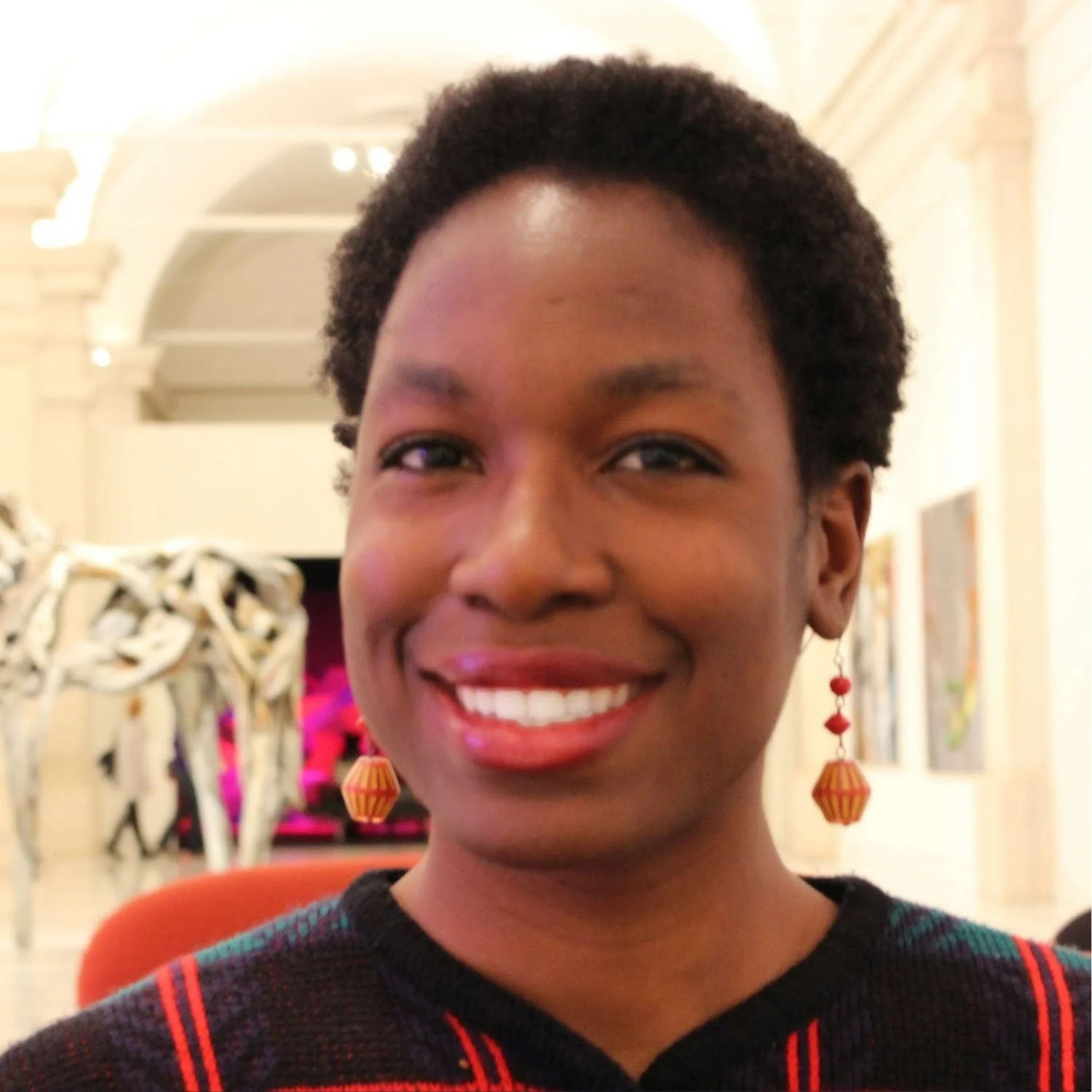
Elmina Bell is an Indigenous African Psycho-Spiritual Practitioner. Their work as a trained trauma-informed peer support facilitator, crisis/refuge worker, astrologer, sound healer and medium, is guided by knowledge systems of her ancestors and Disability Justice and Healing Justice principles.
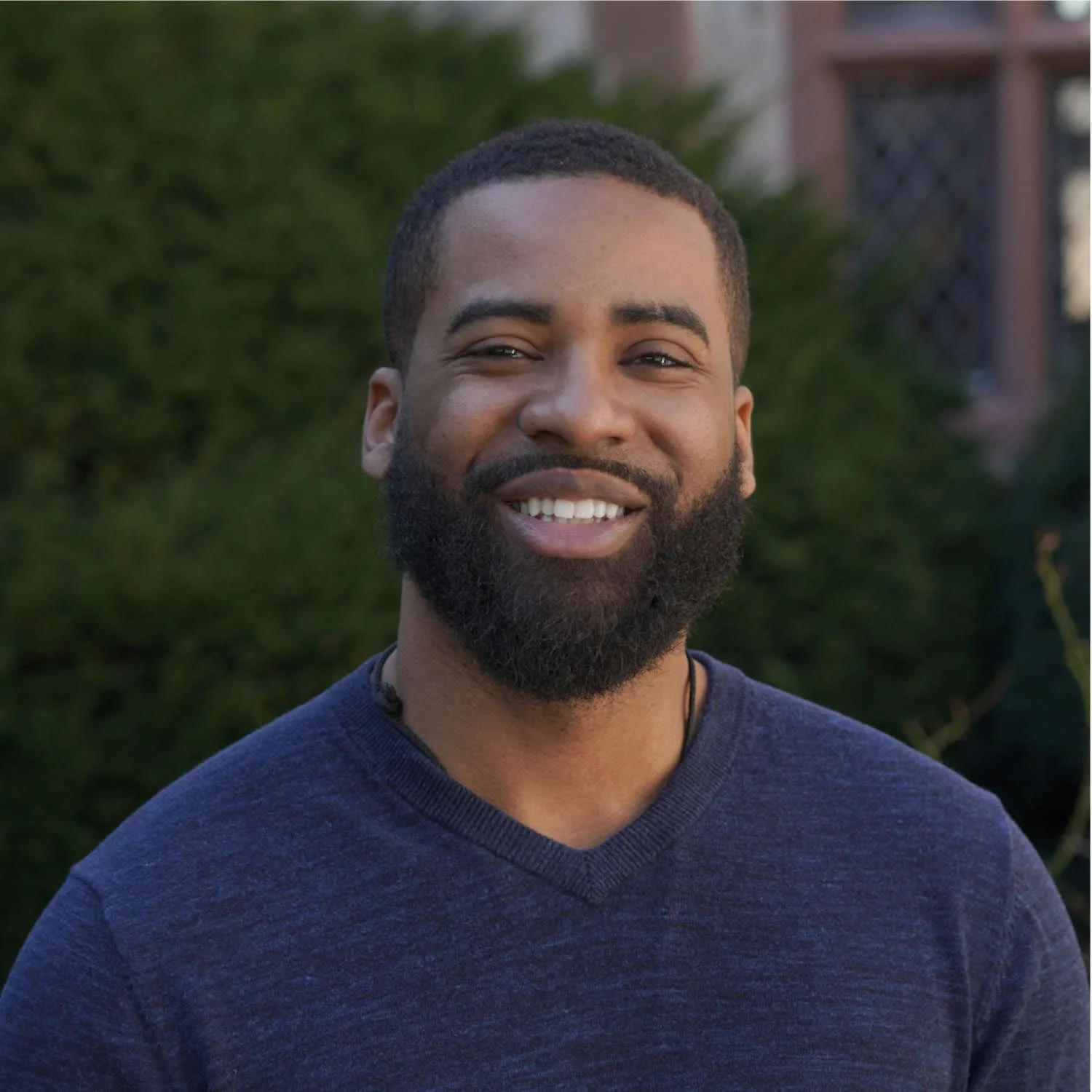
Evan Auguste, PhD, is an Assistant Professor of Psychology at John Jay College of Criminal Justice. He completed his Ph.D. in clinical psychology with a major area of focus in forensic psychology at Fordham University in 2022. Auguste is a 2014 graduate of Middlebury College. His identities as a Haitian-African American man have informed his work on examining how the U.S.’s history of anti-Blackness has shaped psychological realities both in and outside of the country’s borders. He is the director of the A.S.I.L.I. Collective and recently edited the volume The Carceral State, Forensic Psychology, and Black Resistance: “Let Them Not Be Forgotten”, which outlines the theoretical and ethical commitments for forensic psychologists in the struggle for Black liberation and details areas of focus for practice and research.
2.25 CE credits will be available for this class.
This course explores alternatives to grief suppression by examining how personal, collective, and systemic experiences of loss shape the ways we relate to ourselves and one another. Participants will consider how dominant Western cultural and mental health frameworks may reinforce patterns of grief suppression, and how engaging grief can support more sustainable relationships, care practices, and approaches
to social change. Participants will explore reflective questions, relational approaches, and foundational facilitation skills for recognizing and responding to complex experiences of grief. Through reflection and practice, participants will develop skills for building trust-centered spaces in community and professional settings that can support the expression and complexity of individual, interpersonal, and collective grief.
Identify ways grief suppression and avoidance may appear in individual, community and professional relationships.
Apply reflective questions and relational approaches for recognizing and responding to complex experiences of individual and collective grief for social change.
Develop foundational facilitation skills for supporting grief while creating relationships and spaces with sufficient trust to support the expression of grief in others.
Practice skills for inviting and holding multiple dimensions of individual, interpersonal, and collective grief within individual and group settings.
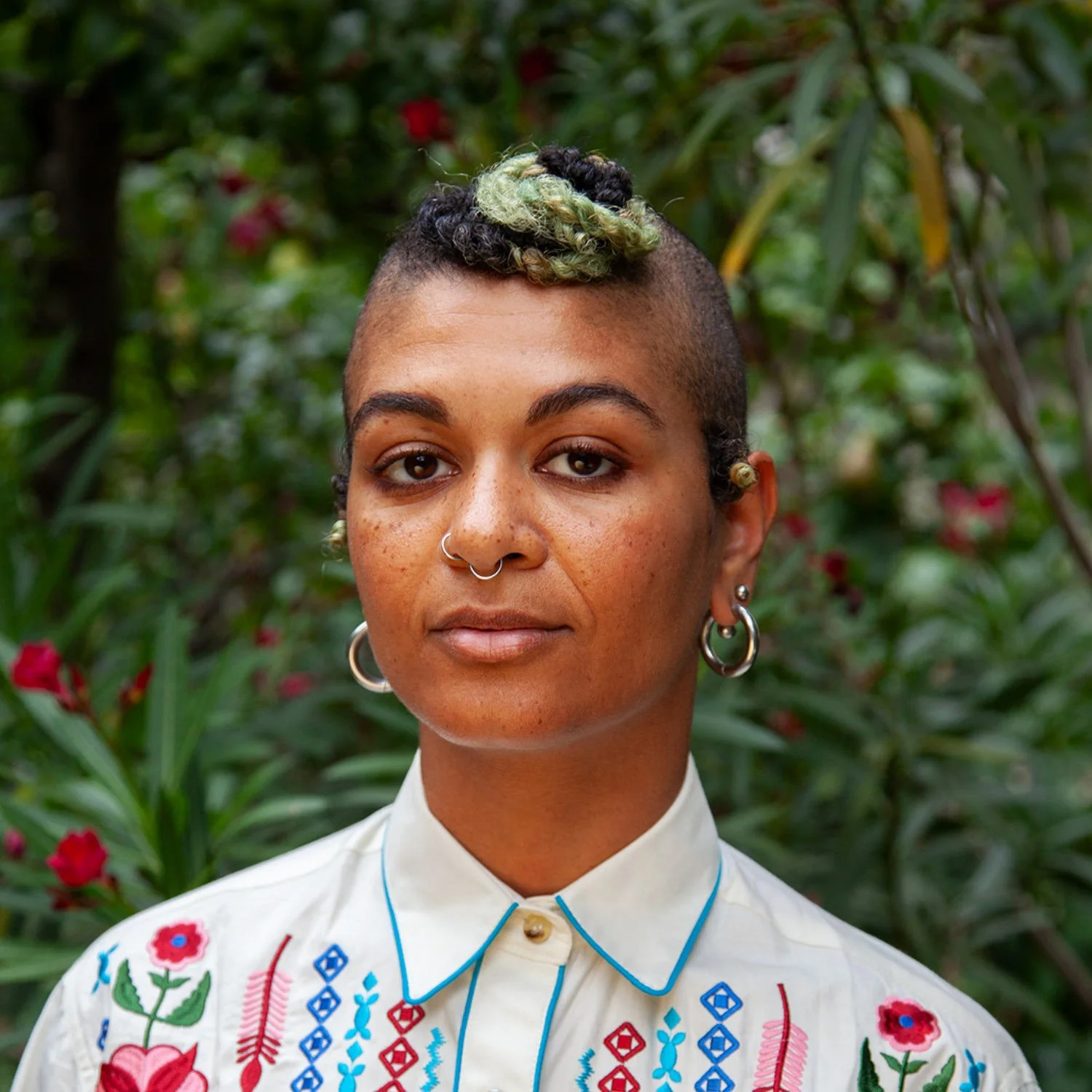
Camille Sapara Barton (they/them) is a writer, embodiment social designer, advisor and educator who creates resources or collective experiences that prototype embodied decolonisation and reconnection to the web of life. Camille’s work is grounded in Black Feminism, ecology, somatics and harm reduction. They are the author of Tending Grief: Embodied Rituals for Holding Our Sorrow and Growing Cultures of Care in Community (2024).
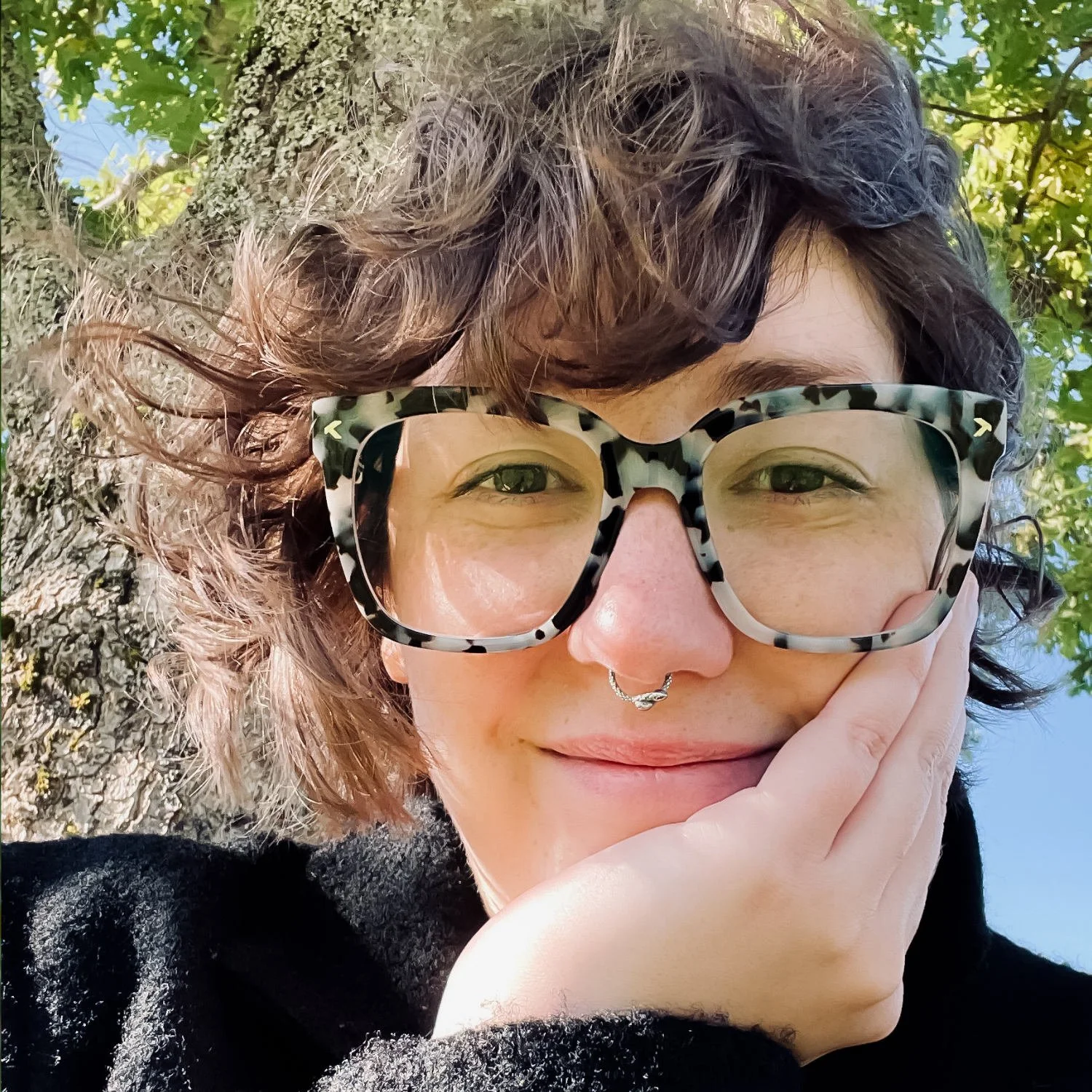
Mal Rose (they/she), Grief Educator, has spent the last decade coaching, speaking, writing, and consulting on the topic of grief care and is thoroughly convinced of its ability it change the world for the better. Rooted in their lived experiences as a multi-violence and near-death experience survivor, they invite individuals, groups, and whole organizations to harness grief care as a force of radical cultural, social, and political systems reshaping. A warm, thoughtful, playfully dramatic lamp in the fog, they guide listeners through curious and creative explorations of the role of grief, and the consequences of its suppression, in conflict repair, community sustaining, and world building.
What you get: |
Reduced/Member $35/ class |
General $65/ class |
Supporter $95/ class |
| 2.5-hour live class session | ✓ | ✓ | ✓ |
| Class recording and resource list | ✓ | ✓ | ✓ |
| Access to IDHA's virtual learning community on Mighty Networks | ✓ | ✓ | ✓ |
| Complementary CE credits (2.25 per class) | ✓ | ✓ | |
| Subsidize another participant and sustain IDHA's ongoing training program | ✓ |
We love organizing these classes and we’re committed to keeping them as accessible as possible. At the same time, there’s a lot that goes into making them happen. As we navigate a shifting and uncertain funding landscape and move toward becoming more community-sustained, we’ve made a small increase to our live series registration fees this year. Your registration helps cover the cost of compensating our faculty, providing live ASL interpretation and accurate captioning, and maintaining the tech platforms that keep classes running smoothly.
If cost is a barrier, we don’t want that to be the reason you can’t join us. We are also offering full and partial scholarships to each class. Our Scholarship Program is for mental health providers, peers, current and prior users of mental health services, and/or activists and advocates who are passionate about transformative mental health practices. POC, LGBTQI, transgender, low-income, disabled persons, and other marginalized groups will be given priority.
IDHA is pleased to offer this series for Continuing Education (CE) credits. We offer these credits through our partner CE-Go. Please note that to receive CE Credits you must attend the class live. For full information about CE Credits offered, please visit the course’s registration page and navigate to the section on CE credits.
As a training institute that values lived experience as highly as professional training, IDHA recognizes the way that the credentialing system enforces a culture of professionalism and devalues lived experience. At the same time, we believe it is a radical act to offer our training content for CE credits, ensuring that mental health workers and other clinicians can apply transformative mental health knowledge in maintaining a credential.
What’s unique about IDHA’s approach?
We value lived experience as highly as professional training, so each course will be led by both a mental health clinician as well as someone who identifies as a survivor, a mental health service user, and/or someone who has experienced a mental health crisis. This will ensure participants receive holistic and nuanced perspectives.
Who is this series for?
This series is for mental health professionals, including but not limited to: clinicians, such as psychologists, psychiatrists, and social workers, peer specialists, recovery support specialists, housing specialists, nurse practitioners and medical professionals, students. and anyone who works or plans to work with and around people who experience mental health-related issues. This series is also for people with lived experience and those who love them.
Where are the classes held?
Classes will be held virtually via Zoom. Be sure to download the Zoom software onto your computer in advance of the training!
Are scholarships available?
IDHA will award a set of full and partial scholarship positions to mental health providers, peers, current and prior users of mental health services, and/or activists and advocates who are passionate about transformative mental health practices. POC, LGBTQI, transgender, low-income, disabled persons, and other marginalized groups will be given priority. Learn more about our Scholarship Program here.
Are these classes accessible?
Live ASL translation and automated closed captioning will be provided for all sessions.
Do I have to show up right at the time advertised for the class?
Yes, this is a live training so please be sure you are available at that time. All sessions will be recorded and shared with registrants after, however, if you want to earn CEs for the class you must show up in person.
Will I have the opportunity to interact with faculty?
Yes, each live training will provide the opportunity to interact with the faculty.
What is your cancellation policy?
For any questions or concerns, please email us at contact@idha-nyc.org.
There is no conflict of interest or commercial support for this program.