
About the Event
As conversations around mental health care continue to expand, it becomes increasingly important to hold space for perspectives around patient autonomy and the unintended harms that can come from psychiatric care. At a time when public awareness of mental health is expanding, we are being asked to grapple with more complex and often marginalized perspectives—particularly the ways in which systems of care can misinterpret, dismiss, or even exacerbate suffering.
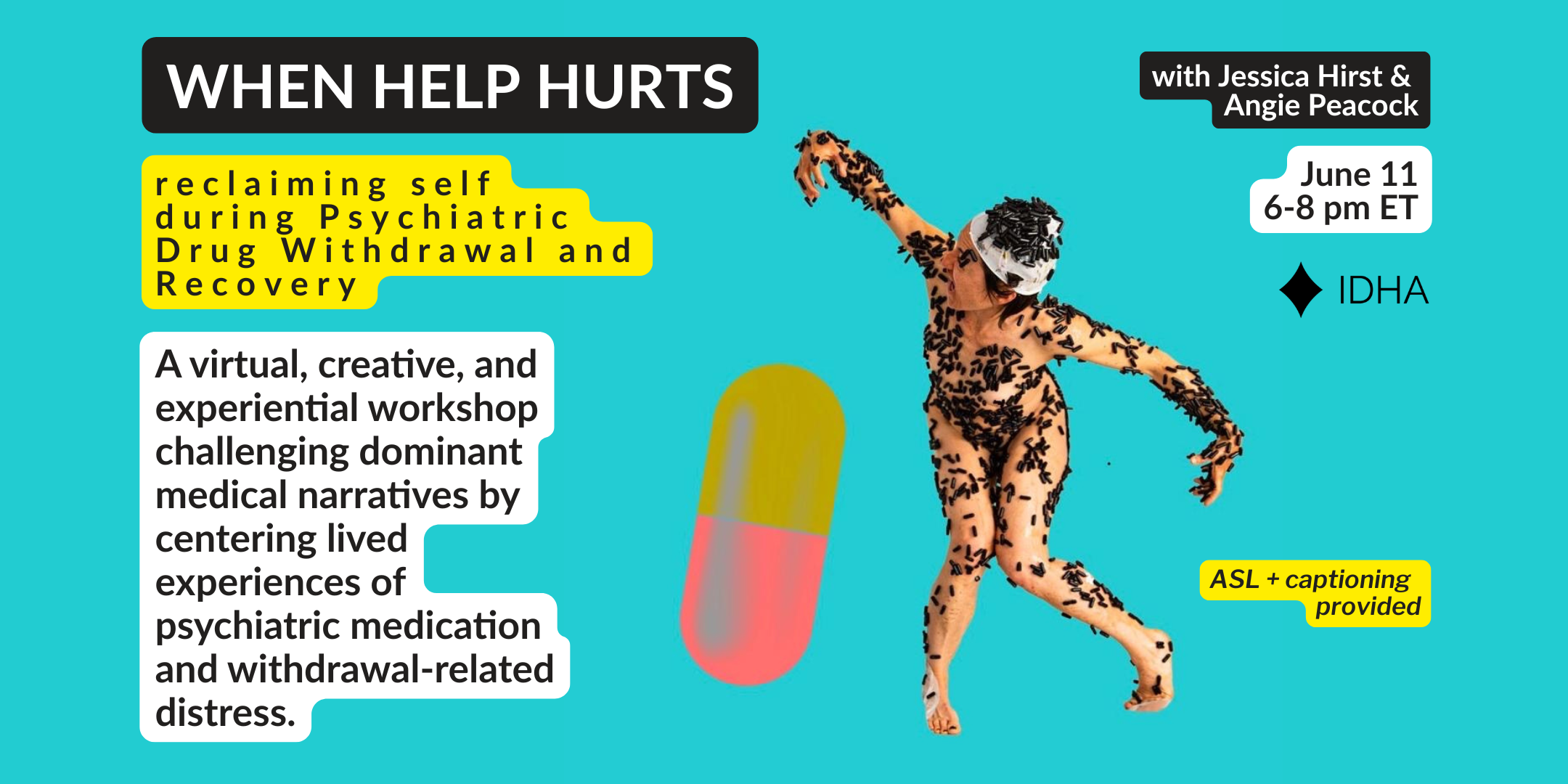
Join IDHA on Wednesday, June 11 from 6–8pm ET for a virtual, creative, and experiential workshop challenging dominant medical narratives by centering lived experiences of psychiatric medication and withdrawal-related distress. The session will combine an educational presentation, video excerpts, and artistic documentation to examine withdrawal, misdiagnosis, and the systemic misunderstanding of states linked to psychiatric treatment, while offering alternative frameworks for making sense of these experiences. The session also includes a guided creative workshop where participants can engage in writing, visual art, or embodied expression using everyday materials, followed by optional group reflection and discussion. With an emphasis on consent, pacing, and self-care, the session provides both educational content and space for personal exploration, concluding with shared resources and avenues for further support. By combining lived experience, activism, and artistic practice, the event contributes to broader debates regarding informed consent, diagnostic authority, and the role of grassroots knowledge in reshaping mental health discourse.
This event is open to mental health workers and clinicians, researchers, educators, activists, survivors, peers, current and prior service users, writers, artists, and other advocates – anyone who is interested in exploring the link between personal and societal transformation.
Register in advance via Eventbrite to join. After registering, you will receive a confirmation email containing information about how to join.
Donations
IDHA is a small organization that strives to meet the accessibility needs of our community to the best of our ability. Our events are by tiered suggested donation to ensure we can provide closed captions on our events and other programs, though we strive to never turn anyone away. We appreciate donations of any size for those who have capacity to give..
Access
ASL interpretation + automated closed captioning will be provided. The event will be recorded and shared with all registrants. Please submit any additional access needs to contact@idha-nyc.org.
DISCLAimER
Sensitive topics such as suicidal ideation and varying states of distress caused by traditional treatment will be discussed.
Facilitators
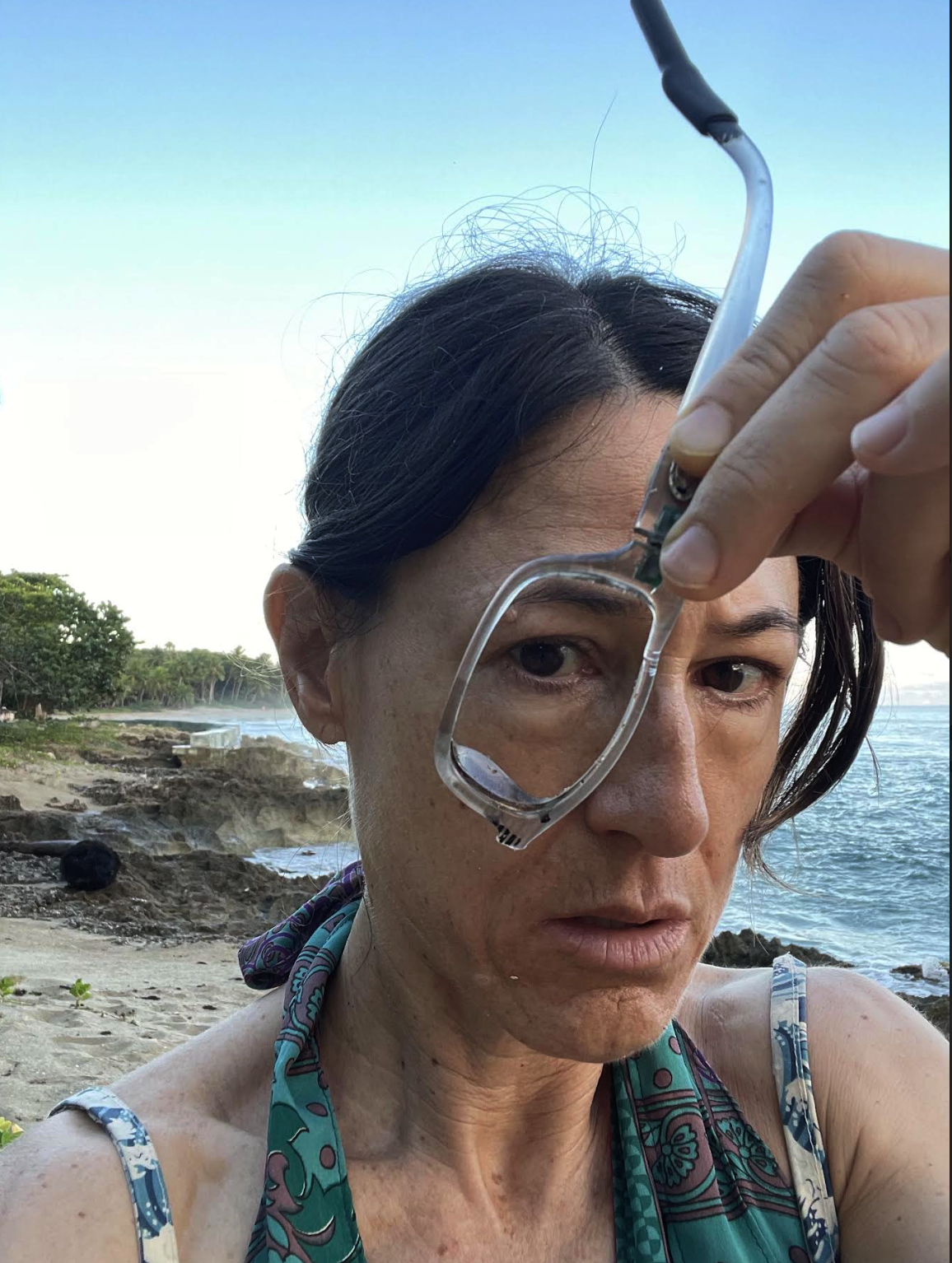
Jessica Hirst
Jessica Hirst is a multidisciplinary artist, working in performance, video, and installation. She works on issues including neurodiversity, psychiatric medication, disability, migration, and climate change. She has been a refugee since 2006 from the toxic habitat of the United States, having lived in Nicaragua, Spain and the Dominican Republic. She identifies as neurodivergent and disabled and suffers from long-term adverse effects of psychotropic medications.
Jessica has a degree in Earth Systems from Stanford and has studied at UC Berkeley in the Energy and Resources Group at Johns Hopkins University in Community Counseling and inthe MFA Public Practice program at Otis College of Art and Design.
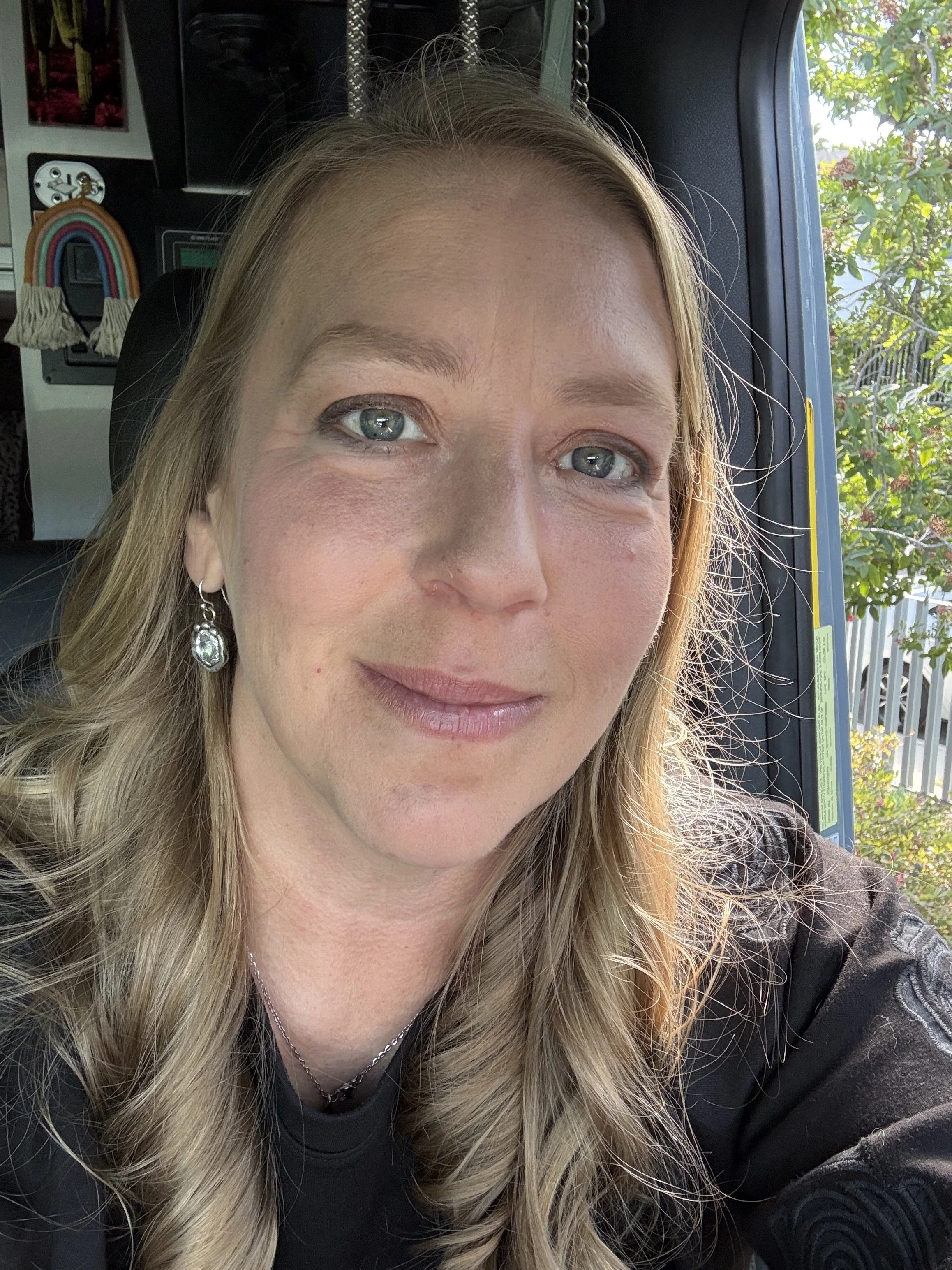
Angie Peacock
Angie Peacock, MSW, CPC is a U.S. Army combat veteran, psychiatric drug withdrawal and healing coach who educates individuals, families, and organizations on harm reduction and safe deprescribing after surviving years of overmedication following military and interpersonal trauma. She is featured in Medicating Normal and is the founder of HeartCore Collective, where she supports people healing from psychiatric drug injury and reclaiming autonomy beyond the traditional mental health system.